Even though the Netherlands has strong tools in place like the Housing Valuation Point System which was first introduced in 1979 the housing market is in a cost crisis. Houses are too expensive too buy and social housing is inaccessible due to low availability. Because this puts the middle class under pressure the housing crisis is extremely politicised and was an important topic in the election this November.
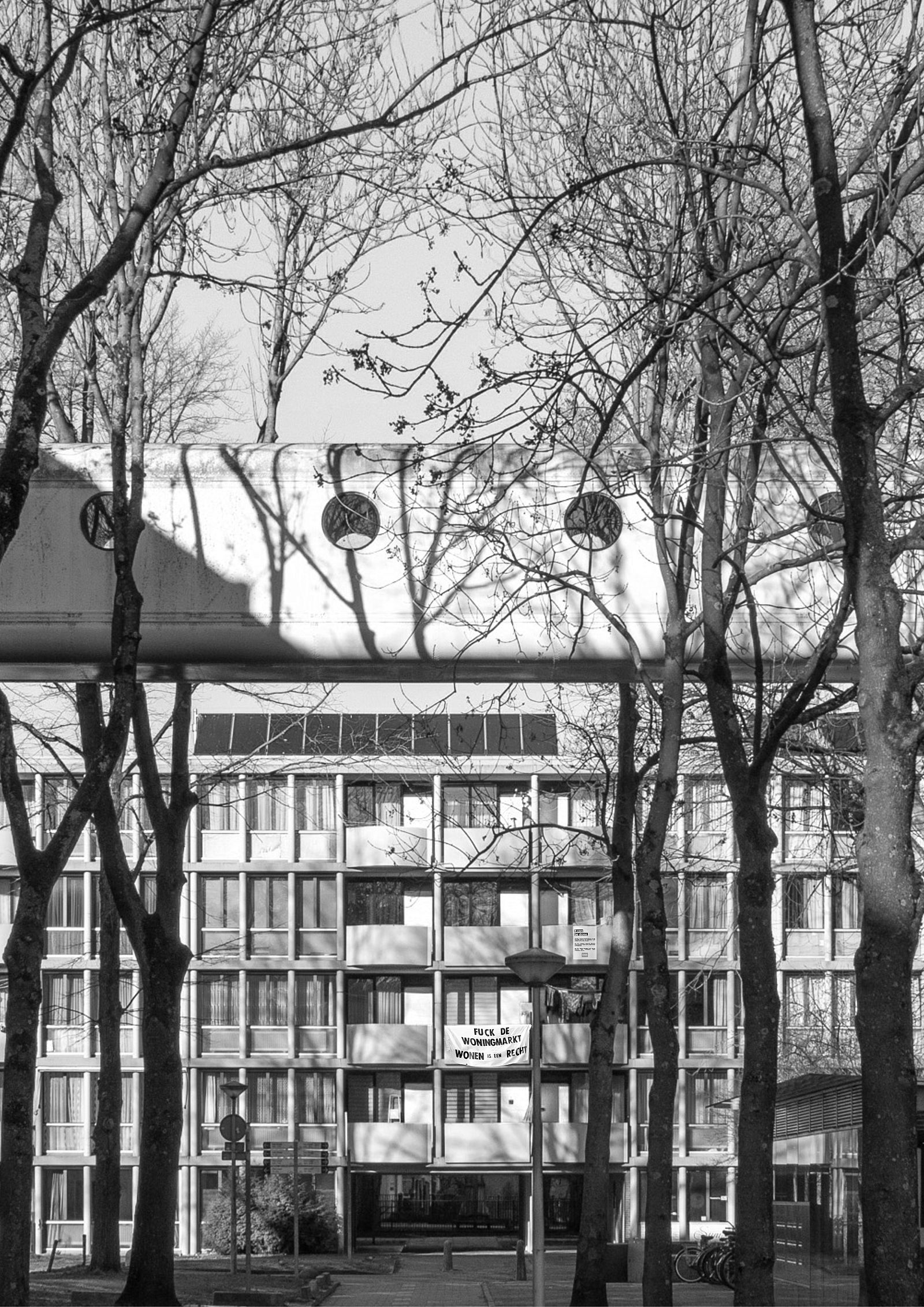
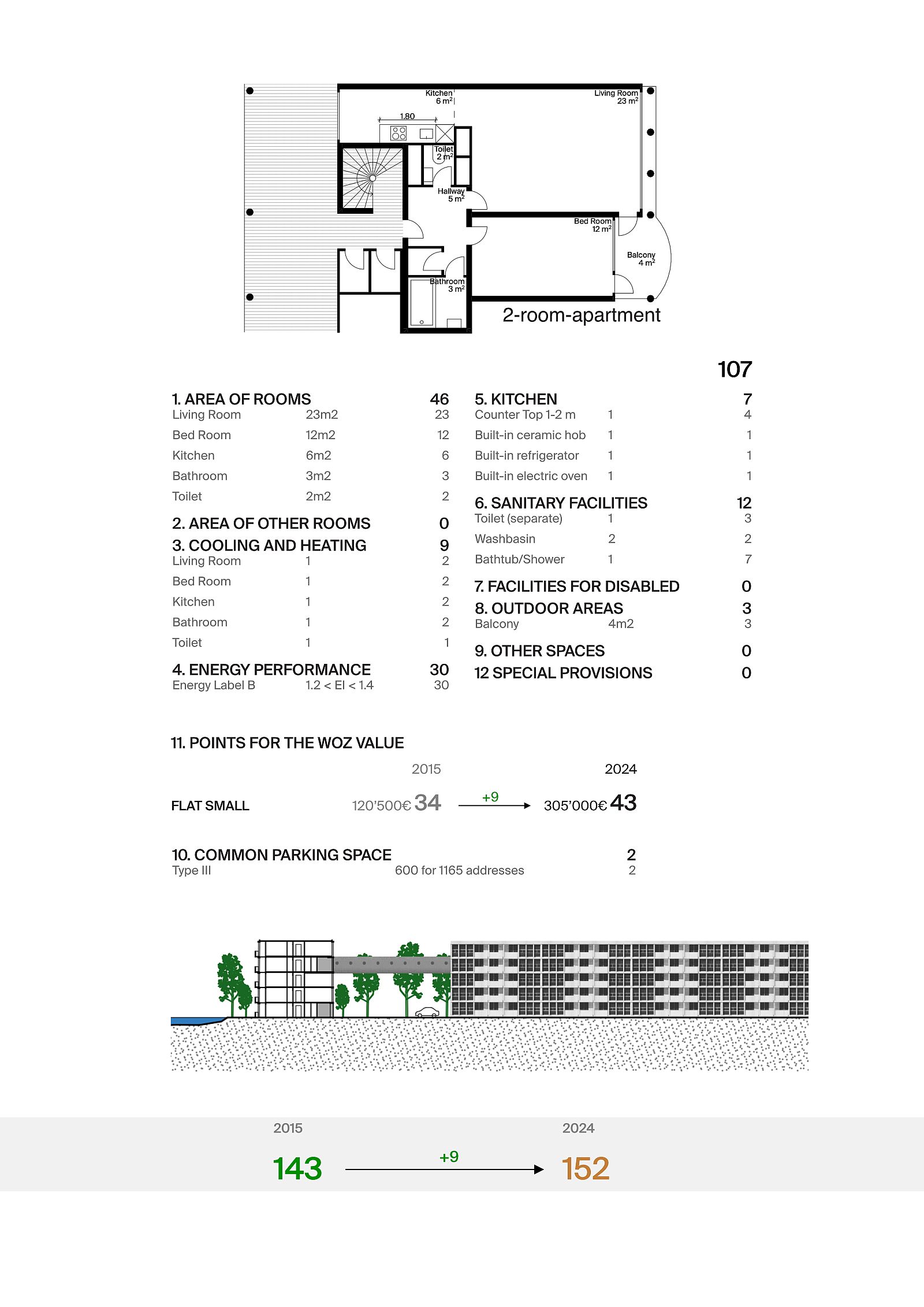
I predicted how the two most likely coalitions would mend the point system to fit their agenda and and how this affects rents, social housing stock, sustainability and neighbourhoods. This shows how even a jurisdictional right to adequate rent can easily be appropriated by governing authorities to control what adequate housing means and who deserves it. The Plan Van Gool, a 220,000m² neighborhood, designed in 1968 by the architect Frans Van Gool, consists of long five-story slabs with a mix of mostly 2- and 4-room apartments. It is situated in the rapidly gentrifying area of Amsterdam Noord. Rising property values pushed many of the 1,165 apartments above the 143-points social rent threshold and others past the 187- points liberalization threshold, making the Plan Van Gool complex highly attractive to investors. The Plan Van Gool stands as an example of Amsterdam’s slow erosion of social affordability and increasing spatial segregation.