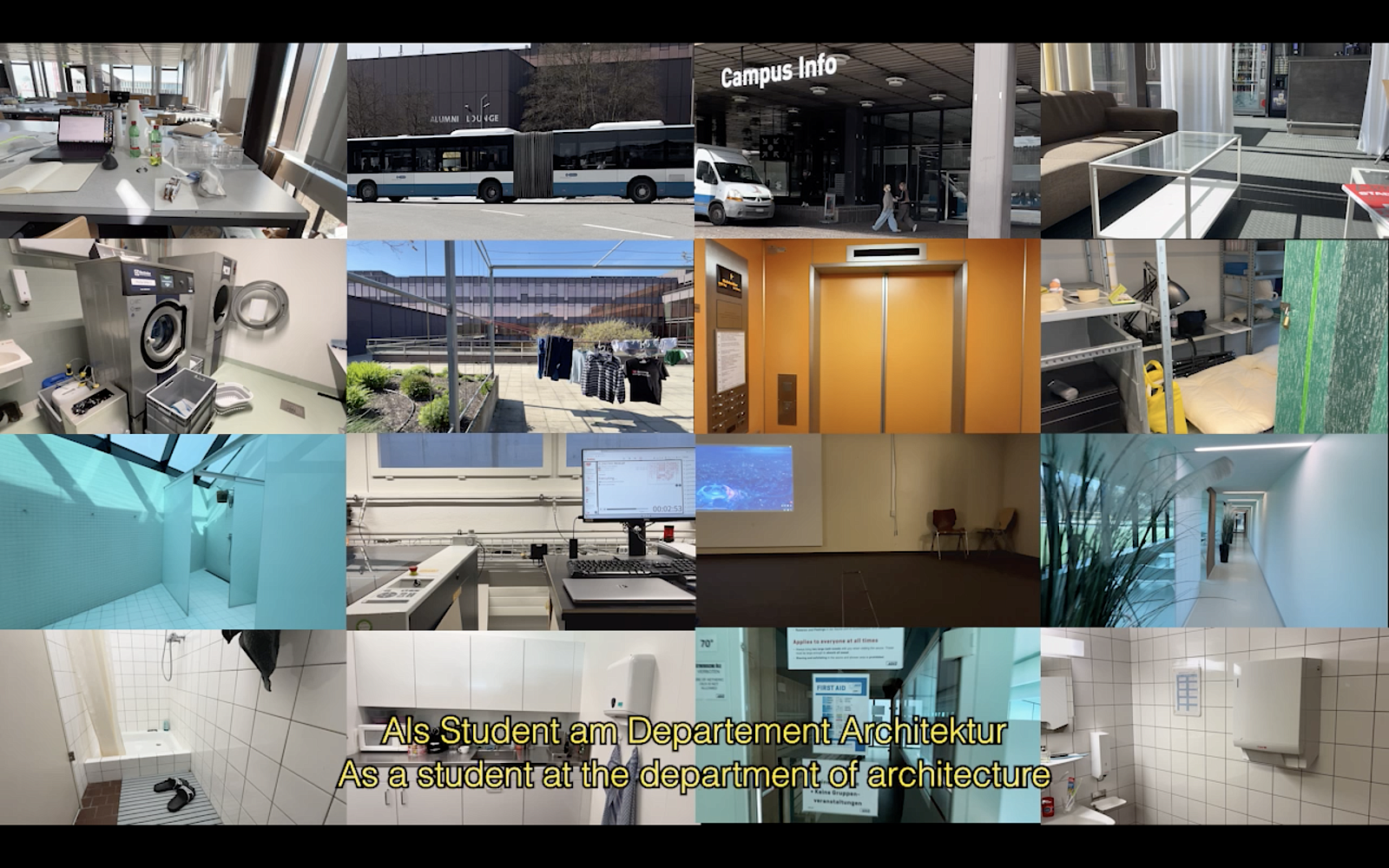
HIL LIVING LAB
The LIVING LAB HIL is planning and designing the upcoming renovation of the HIL to improve energy efficiency, fire safety and technical building equipment. At the same time, the building is to be expanded to enable the entire D-ARCH to be brought together at Hönggerberg. The LAB aims to link teaching, research and knowledge transfer in a real construction project. The approach places particular emphasis on experimental work on site, the preservation and reuse of the existing building fabric, and the implementation of the renovation during ongoing operations in order to avoid relocating users and renting external space. Is it not in these times of transition that we could question the possible futures of our HIL – beyond the technical solutions?
HIL LAB FOR LIVING
Housing is not a peripheral aspect of university life – it is a prerequisite. For students, settling in means not only securing a place at university, but also finding a place where everyday life can unfold: sleeping, studying, retreating and building relationships. Without this physical anchor, a sense of belonging remains fragile. With rising student numbers, therefore a fundamental question arises: who is responsible for helping students settle in?
Institutions such as ETH Zurich offer education, infrastructure and opportunities – but does their responsibility end at the campus gates? Or is housing, as part of the reality of student life, inextricably linked to studying?
ArrivHIL views housing as an essential component of participation. It is not merely about providing accommodation, but about the conditions under which studying actually becomes possible. Those without a stable place remain in a state of transition – between arrival and orientation, between participation and distance. The question of housing is therefore also an institutional one. Not in the sense of full responsibility, but as part of a broader understanding of education: one that takes students’ living spaces into account. If settling in is a prerequisite, housing cannot be organised exclusively on a private basis. It becomes a shared responsibility – and thus also a question for the institution itself.