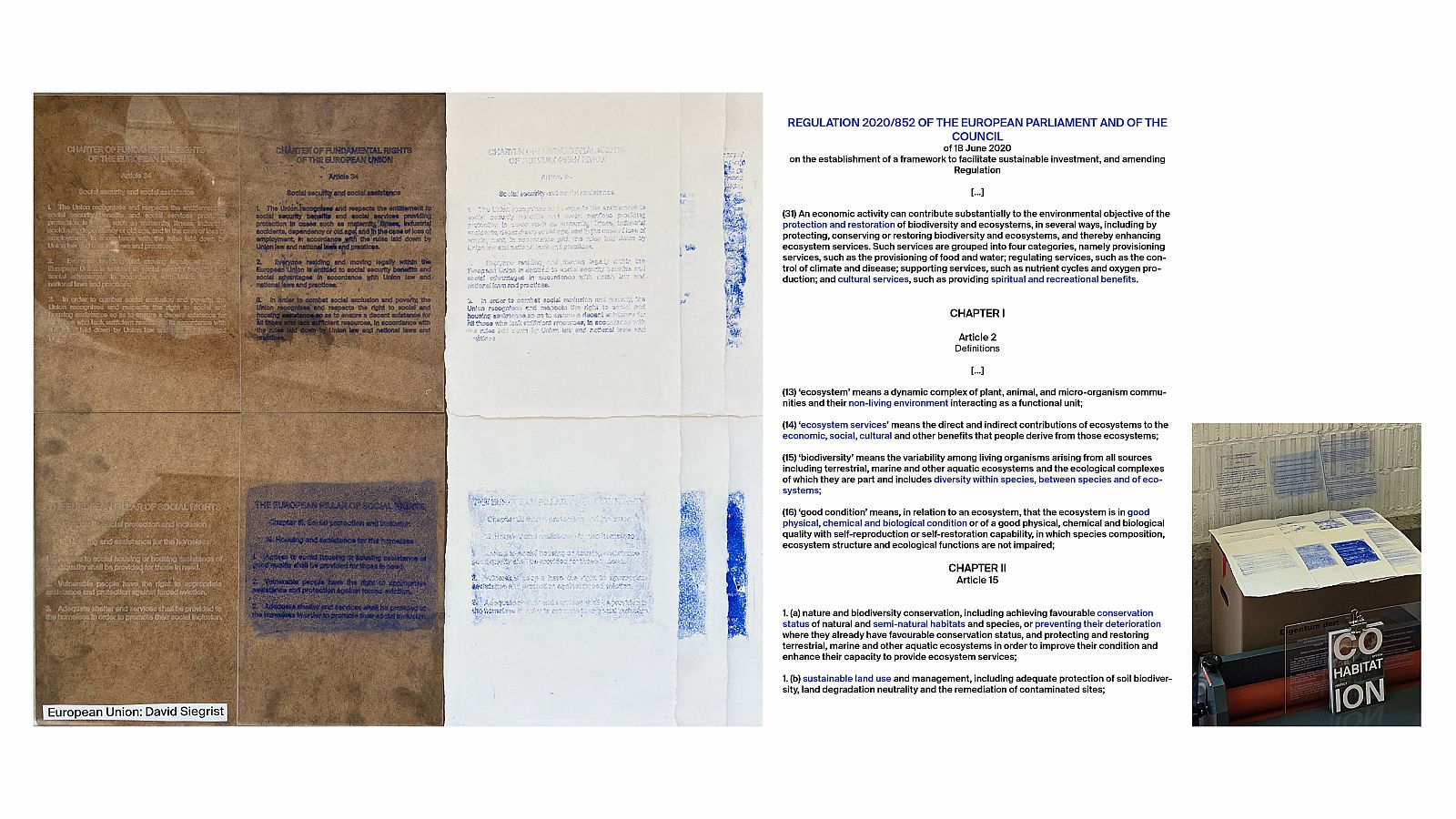
"Berlaymont: Finding And Becoming Common Ground" investigates what a "Right to Housing" could mean at a European scale by operating inside existing legal and financial frameworks rather than proposing new ones from scratch. It takes the EU Taxonomy Regulation as a critical starting point, particularly its definition of ecosystems and habitat, and asks what happens if humans are no longer treated as an exception. If ecosystems are environments that sustain life, then housing becomes a form of constructed habitat and a condition of survival, not a commodity.
Building on this reinterpretation, the project proposes a strategic redirection of capital flows rather than a moral appeal. By expanding the Taxonomy's understanding of sustainability to include human habitat, housing could become eligible for the same large-scale financial steering mechanisms currently reserved for environmental objectives. This opens a pathway to align ESG-labelled investment with long-term affordability.
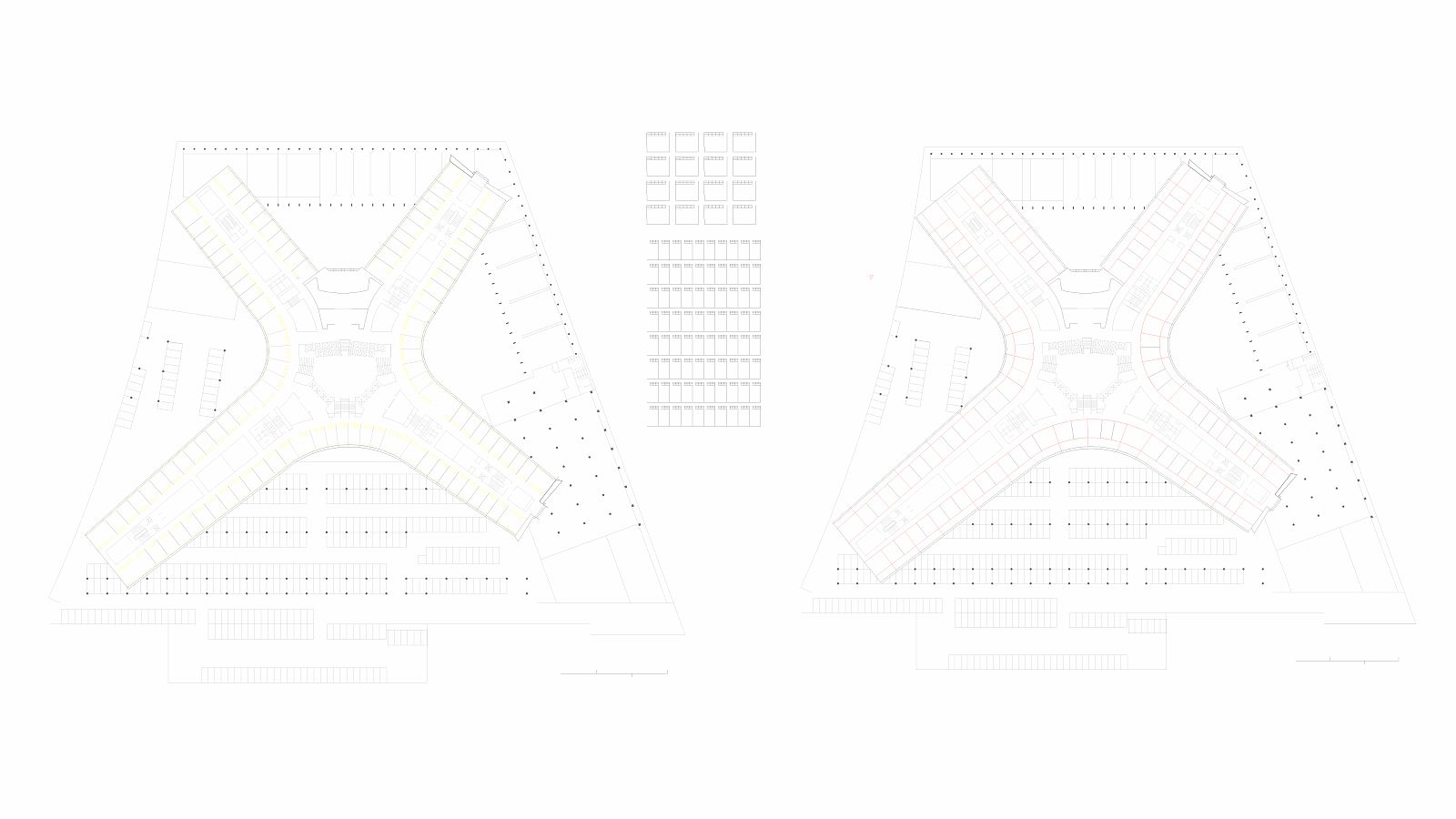
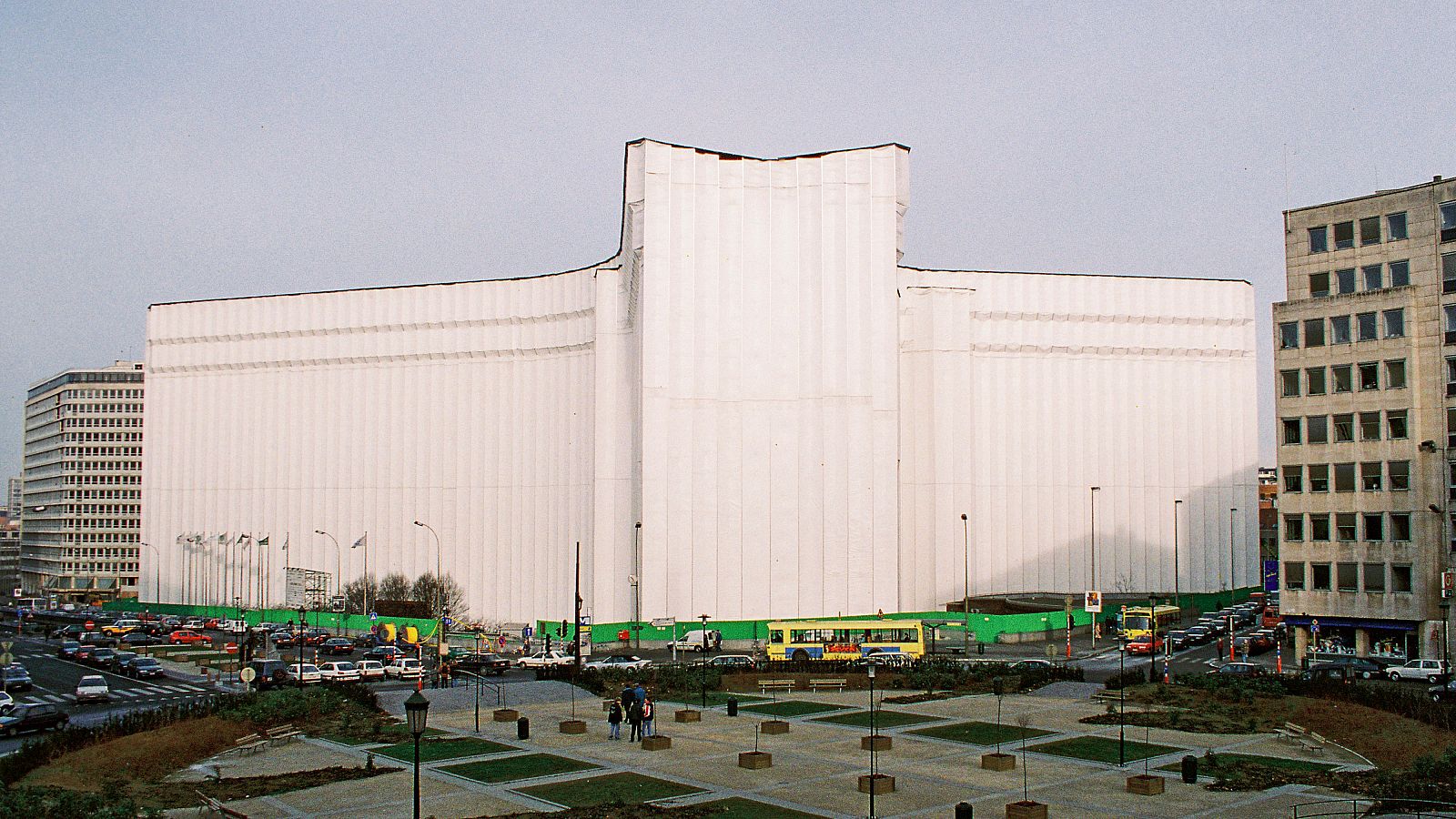
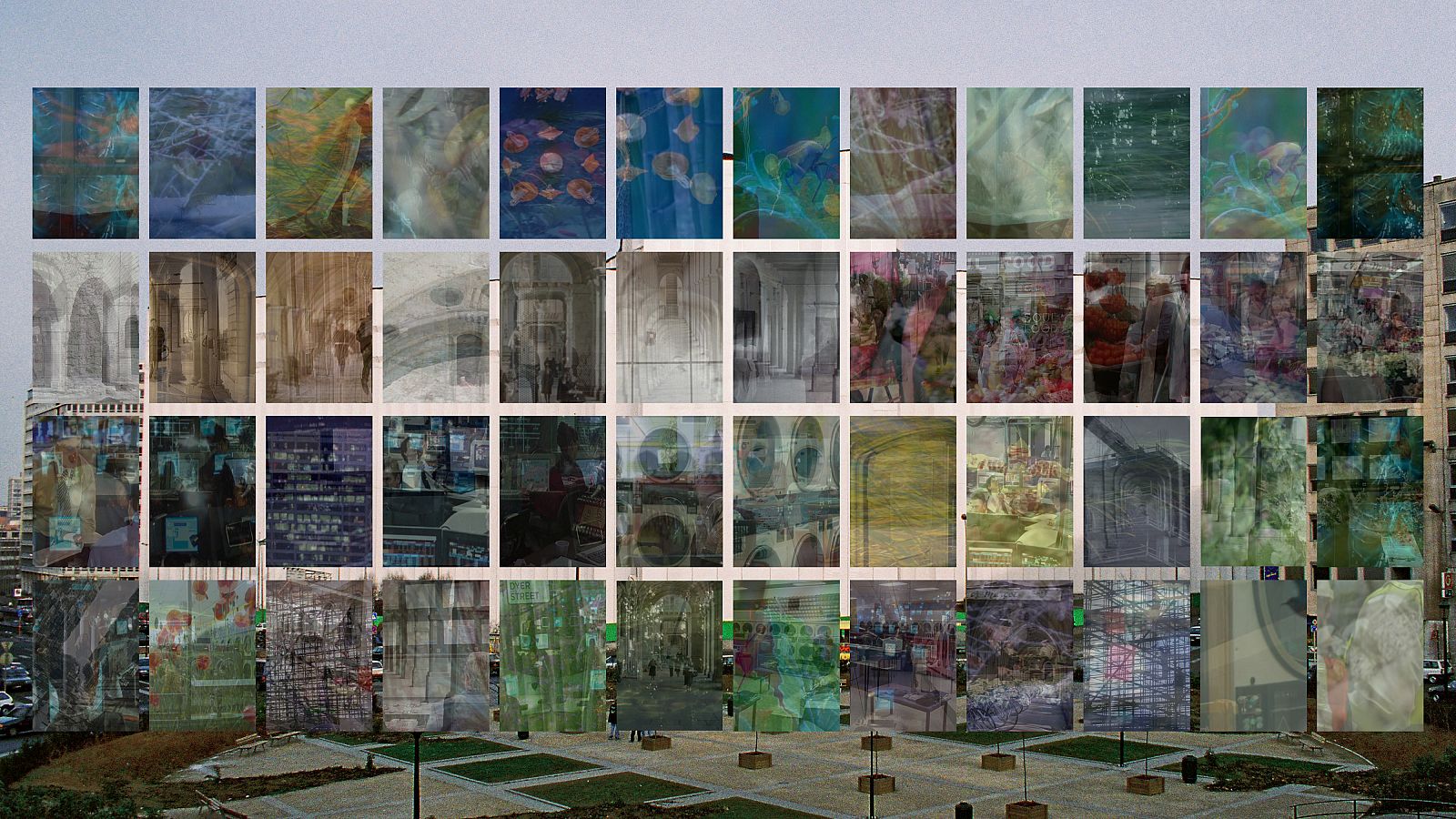
The Berlaymont building in Brussels, headquarters of the European Commission, is used as a concrete case study. Instead of transferring the land to the Commission for a symbolic one euro, the project proposes assigning it to a Community Land Trust, while the Commission retains a long-term lease. The building would be renovated and gradually transformed into social housing, financed through low-interest public loans and redirected sustainable capital. In this scenario, the European Commission becomes both legislator and participant, demonstrating how institutions can actively produce housing as public infrastructure rather than regulate it from a distance.