In Brussels, nearly one in two households qualifies for affordable housing, yet more than 55,000 households remain on waiting lists, often for over a decade. At the same time, the city is marked by deep spatial imbalance: areas like the European Quarter concentrate political and economic power, while remaining largely inaccessible as places to live.
In response, a 25% inclusionary social housing ambition emerged in 2023, but without legislative backing, its delivery depends largely on soft planning tools; design competitions, land sales, and Project Lines shaped by the Bouwmeester Maître Architecte. This project explores how such soft power can be mobilised to produce binding spatial outcomes.
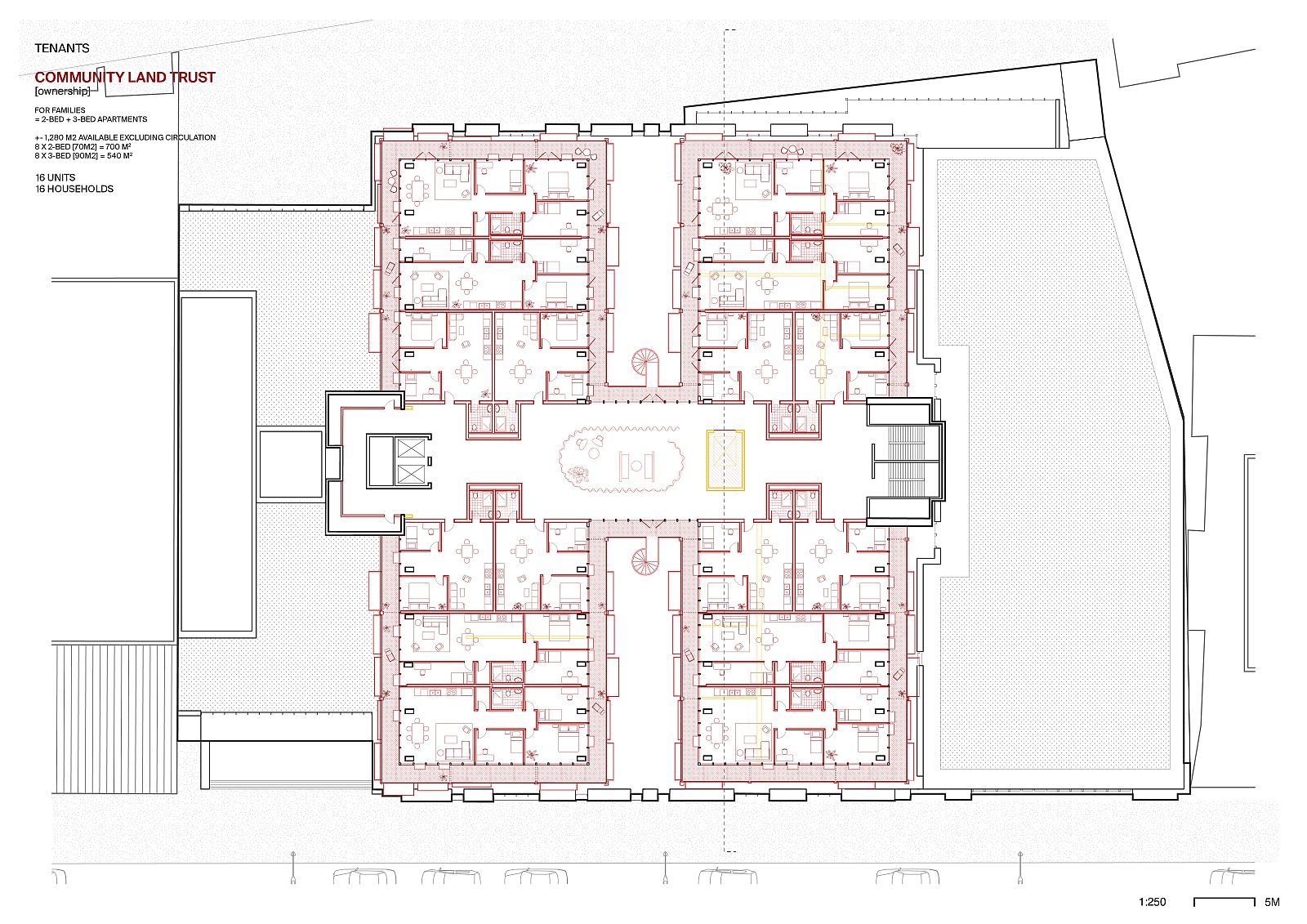
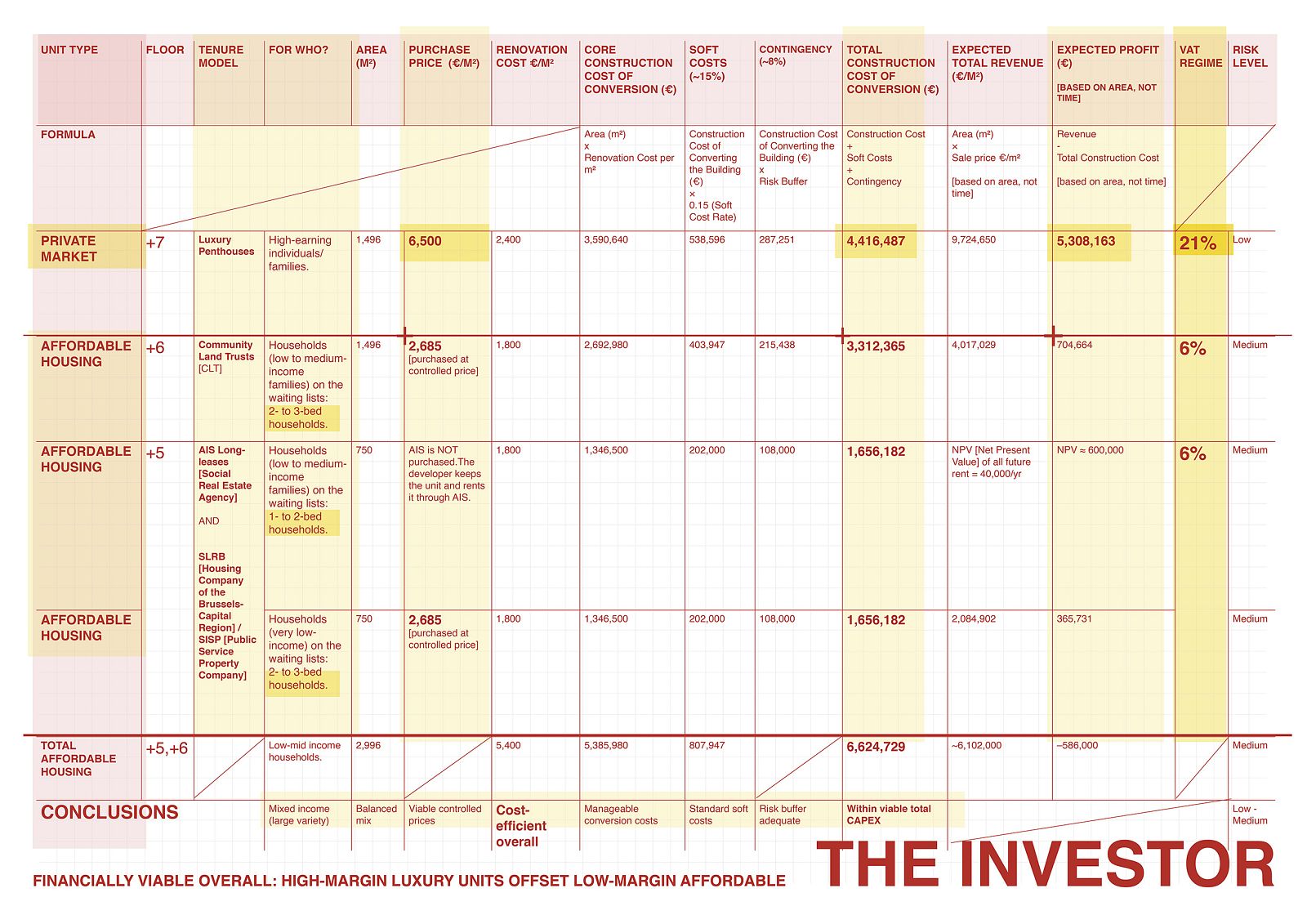
Focusing on a former European Commission building; The Albert Borschette Conference Center, the work translates the 25% ambition into architectural, financial, and ownership structures. It proposes a vertically mixed building where civic functions, market housing, and multiple forms of affordable housing coexist under one roof, secured through controlled prices, long-term leases, and cooperative ownership.
Rather than designing “social housing” as a typology in Brussels, how affordability is produced through governance, financing, and spatial organisation is demonstrated; testing whether soft power can meaningfully shift access to housing in Brussels’ most symbolic districts.